
Slow Cooker Pineapple Upside-Down Cake is one of those desserts that feels like a small miracle: a golden, caramel-topped cake that bakes itself while you go about your evening. The classic pineapple upside-down cake is usually baked in the oven, but a slow cooker gives you a moist, tender crumb and a sticky brown sugar topping with almost no effort. It is an excellent choice for busy weeknights, potlucks, or any time you want a warm dessert without heating up the kitchen.
This recipe is designed for home cooks who want reliable results with pantry staples. It uses a box of yellow cake mix, canned pineapple rings and a handful of simple ingredients, so there is no need to measure flour or whip egg whites. It serves 8 to 10 people, takes about 15 minutes of hands-on preparation, and then cooks for roughly 2 hours and 30 minutes on high heat. Read on for the full ingredient list, clear instructions and plenty of tips for a perfect result.
Why you'll love this slow cooker pineapple upside-down cake
- It requires only about 15 minutes of active preparation, which makes it ideal for busy days.
- The cake mix base keeps the process simple and the results consistent every single time.
- The slow cooker keeps the cake wonderfully moist, so it rarely dries out at the edges.
- The pineapple and brown sugar caramelize into a glossy topping that looks impressive when inverted.
- It is inexpensive to make, using ingredients most people already keep in the cupboard.
Ingredients
- 1/4 cup (60 g) butter, melted
- 1/2 cup (100 g) packed brown sugar
- 1 can (20 oz / 560 g) pineapple rings in juice, drained, reserving 1/4 cup juice
- 8-10 maraschino cherries (optional)
- 1 box (15.25 oz / 432 g) yellow cake mix
- 3 large eggs
- 1/3 cup (80 ml) vegetable oil
- 1/2 cup (120 ml) water or reserved pineapple juice
Prep time: 15 minutes. Cook time: 2 hours 30 minutes. Servings: 8-10.
The success of this dessert depends on a few key ingredients. Choose pineapple rings packed in juice rather than heavy syrup, because the juice gives the batter a subtle fruity sweetness and keeps the rings from becoming overly sugary. Use a light or golden brown sugar for the topping, as its gentle molasses flavor pairs beautifully with the pineapple. Look for a standard yellow cake mix without pudding added, since pudding-style mixes can make the texture heavier in a slow cooker. Fresh eggs at room temperature will blend more smoothly into the batter, and a neutral vegetable oil keeps the cake tender without competing with the fruit.
Instructions
- Prepare the slow cooker. Line the slow cooker insert with parchment paper or grease it well so the cake releases easily later.
- Make the topping base. Pour the melted butter into the bottom of the insert and sprinkle the brown sugar evenly over it, spreading it to cover the surface.
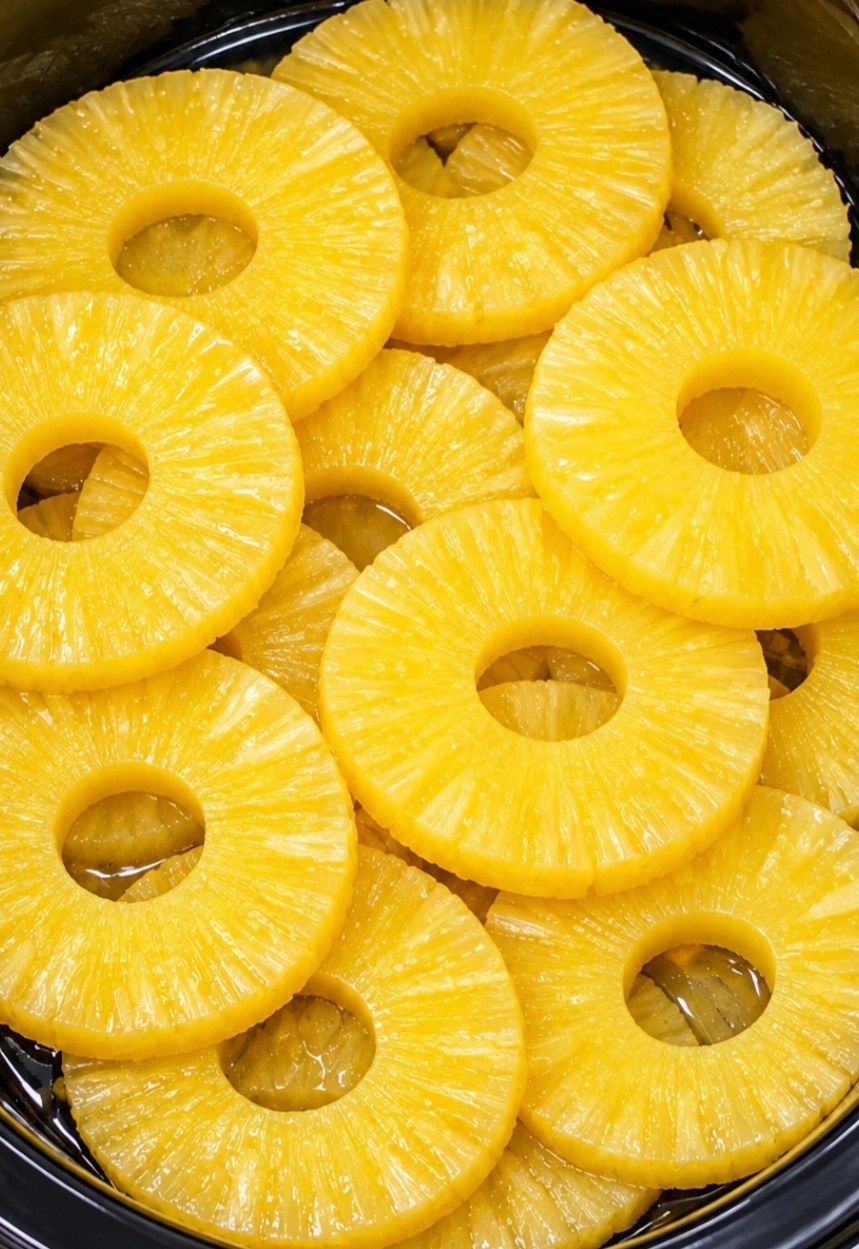
- Arrange the pineapple. Lay the drained pineapple rings in a tight, overlapping layer over the sugar. Place a maraschino cherry in the center of each ring if you like the classic look.
- Mix the batter. In a bowl, whisk together the cake mix, eggs, vegetable oil and water or reserved pineapple juice until the batter is just smooth. Avoid overmixing.
- Add the batter. Pour the batter gently over the pineapple rings, then spread it evenly so the fruit is fully covered.
- Cook the cake. Place a folded paper towel under the lid to absorb condensation, then cover and cook on HIGH for 2 to 2.5 hours, until a toothpick inserted into the center comes out clean.
- Rest the cake. Turn off the slow cooker and let the cake rest for 10 minutes so it firms up slightly. Run a knife around the edge to loosen it.
- Invert and serve. Place a serving plate over the insert, carefully flip it over, and lift off the insert. Serve warm, optionally with whipped cream or vanilla ice cream.
Tips for the best results
- Drain the pineapple well and pat the rings dry with a paper towel so the topping does not become soggy.
- Use parchment paper that extends above the sides of the insert, which makes lifting the cake out far easier.
- Keep the paper towel under the lid at all times; it prevents drips of condensation from landing on the cake.
- Check for doneness at the 2-hour mark, since slow cookers vary and some run hotter than others.
- Do not lift the lid during the first 90 minutes, because releasing heat can cause the center to sink.
- Invert the cake while it is still warm, but not hot, so the caramel topping releases cleanly without tearing.
Variations and substitutions
- Crushed pineapple: Spread well-drained crushed pineapple over the sugar for a softer, more spreadable topping.
- Spice cake mix: Swap the yellow cake mix for spice cake for a warm, autumn-inspired flavor.
- Pecans or walnuts: Scatter a half cup of chopped nuts over the brown sugar before adding the pineapple for extra crunch.
- Coconut: Sprinkle sweetened shredded coconut over the pineapple layer for a tropical twist.
- Dairy-free option: Use plant-based butter and a non-dairy milk in place of the water if you prefer, keeping the oil and other ingredients the same.
Serving suggestions
This cake is at its best served warm, when the caramel topping is soft and glossy. A generous scoop of vanilla ice cream melts into the warm pineapple and creates a classic dessert pairing. Freshly whipped cream, a light dusting of toasted coconut, or a drizzle of extra pineapple juice reduced into a syrup all work well too. For a casual gathering, cut the cake into wedges and serve it on small plates with forks. It also pairs nicely with a cup of hot coffee, black tea or a cold glass of milk. Leftover slices make an easy breakfast treat when topped with a spoonful of plain Greek yogurt.
Storage and reheating
Store any leftover cake in an airtight container at room temperature for up to two days, or refrigerate it for up to four days. Refrigerated slices are best warmed briefly before serving. To reheat, place a slice in the microwave for 15 to 20 seconds, or warm it in a low oven at 300 degrees F (150 C) for about 5 minutes until just heated through. Cover the slice loosely so it does not dry out. The cake also freezes well: wrap individual slices tightly in plastic wrap and foil, then freeze for up to two months and thaw overnight in the refrigerator.
Frequently asked questions
Can I make slow cooker pineapple upside-down cake without cake mix?
Yes, you can make a from-scratch batter using flour, sugar, baking powder, eggs, milk and butter. The texture will be slightly denser than the cake-mix version, so keep an eye on the toothpick test. Pour the batter over the same pineapple and brown sugar base and cook on high until the center is set.
Why is my upside-down cake soggy in the middle?
Sogginess usually comes from excess liquid, such as undrained pineapple or condensation dripping from the lid. Drain the rings well, pat them dry, and always use a paper towel under the lid. Cook until a toothpick comes out clean, and let the cake rest before inverting it.
Can I use fresh pineapple instead of canned?
Fresh pineapple works, but it contains more natural juice and enzymes that can affect the texture. Slice it into rings about half an inch thick and pat them very dry. Canned rings are more consistent and are generally recommended for this recipe.
How do I stop the cake from sticking to the slow cooker?
Line the insert with parchment paper that extends above the rim, or grease it thoroughly with butter or nonstick spray. Let the cake rest for about 10 minutes before inverting it, and run a thin knife around the edge to loosen it first.
Can I double the recipe for a larger slow cooker?
Doubling is not recommended in a standard slow cooker, because the batter may not cook evenly and the center can stay raw. For a larger group, make two separate cakes in sequence or bake the recipe in an oven-safe pan instead.
Final thoughts
Slow Cooker Pineapple Upside-Down Cake proves that a classic dessert can be simple, reliable and wonderfully satisfying with very little effort. The sticky pineapple topping, the tender cake and the warm, comforting flavor make it a favorite for family dinners and gatherings alike. Gather your ingredients, clear a spot in your slow cooker, and give this recipe a try this week. We think you will be delighted by how easily it comes together and how happily everyone reaches for a second slice.